Today (Thursday 9 March 2023) is World Kidney Day during while people are invited to light a candle or shine a torch in honour of all those touched by kidney disease – from patients to donors, to family members and healthcare professionals.
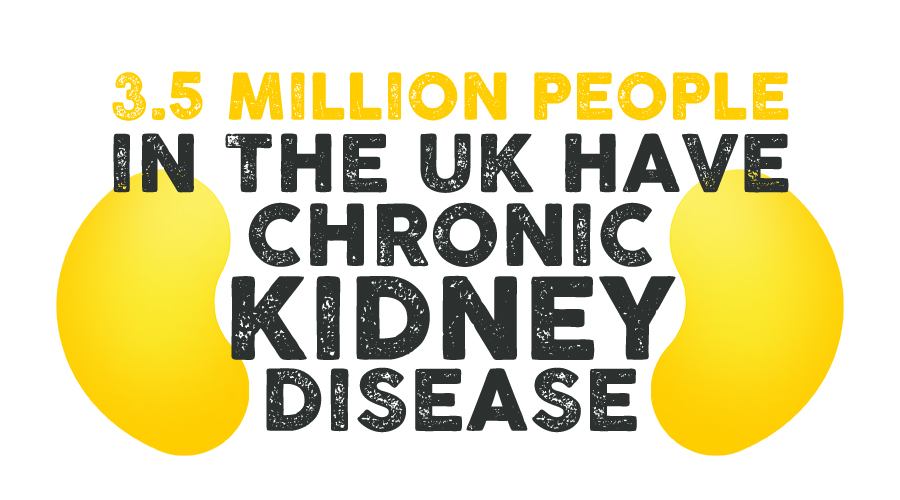
One in ten people worldwide have kidney disease.
I have kidney disease—autosomal dominant polycystic kidney disease (ADPKD) which I inherited from my father who died of kidney failure in 1998. He passed the disease on to my younger sister and younger brother too.
As the name suggests, with polycystic disease my kidneys have developed a lot of cysts (fluid-filled pockets). Imagine a large bath sponge that has a lot of laundry liquid capsules within it.
Or if you prefer an image:
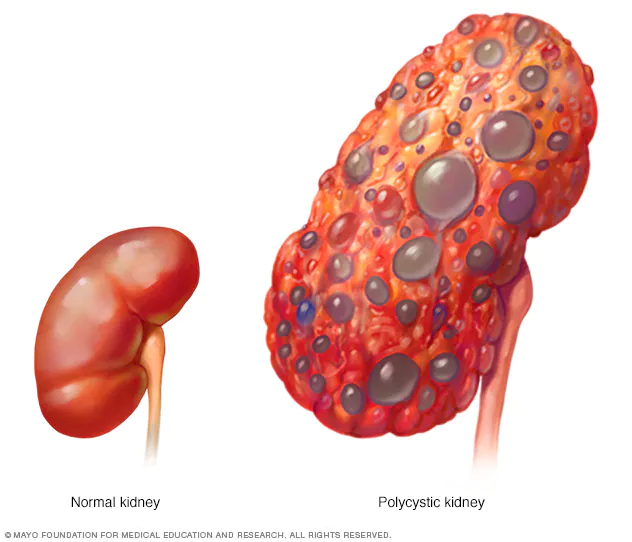
As you can see, PKD kidneys are much larger than usual. Normal kidneys are about the size of a fist (10 to 12 cm). My kidneys are each between 30 and 40 cm—three to four times larger than they should be.
This has a number of side effects.
The most obvious side effect is that this disease gives me the impression of a having a huge belly (‘PKD belly‘ they call it). It looks like I’ve eaten all the pies. And although I have eaten some of them, this is because I have the equivalent of a couple of rugby balls inside me pushing all my organs forward.
This has been one of the hardest things to deal with as it has heavily impacted my self image. I don’t want to be known as a big, fat man—but here we are with these two giant ‘ballooned’ kidneys inside me pushing my stomach out. The only way I will properly recover my waistline is by having my kidneys removed, which obviously comes with its own complications.
On average, though, chronic kidney disease patients wait three years for a transplant. That’s three years on dialysis multiple times a week.
This can lead to chronic pain. And also an increased risk of urinary tract infections (UTIs), kidney stones and other complications. Last week, I had an episode of severe and unbearable kidney pain (8/10) that lasted around eight hours. My GP was amazing, drove to my house and administered a strong painkiller injection.
As the job of kidneys is to filter the blood, having a bunch of cysts inside mine means that the blood backs up as it can’t pass through the kidneys as effectively, giving me high blood pressure. High blood pressure can cause further damage to my kidneys and other organs. I’m on medication for this.
It can also cause a loss of kidney function. My kidney function isn’t the best, but it’s also (currently) not the worst.
Another serious complication is the risk of developing brain aneurysms. This is what first alerted doctors to my father potentially having PKD: he had three brain haemorrhages in 1983.
Then there are other physical impacts such as insomnia, sickness, aching bones, muscle cramps and tiredness. I’ve emboldened the symptoms I currently experience.
I have found the PKD Charity in the UK to be a wonderful support and resource for not only kidney disease sufferers but also their families.
